What Is the Florida 25% Roof Rule?
The “25% rule” is shorthand for a provision in the Florida Building Code, Existing Building volume. The core idea is straightforward: The purpose of the rule is to establish when substantial repairs require the applicable roof section to be brought into compliance with current building code requirements.
So the code sets a threshold. If, within any 12-month period, 25% or more of a roof section is repaired, replaced, or recovered, the entire section must be brought into compliance with the current code. That last part is the expensive part. “Brought into compliance” can mean new underlayment across the whole section, new secondary water barrier, updated fastening patterns, and updated flashing details. Once a contractor prices all of that out on an old roof, the cost gap between “code-compliant repair” and “new roof” often narrows to the point where replacement is the more sensible option. If you’re trying to gauge where that line falls, our breakdown of roof replacement cost in Orlando gives you real local numbers to work from. That’s why homeowners talk about the 25% rule as if it requires a new roof. Technically, it doesn’t. Practically, it often did.
Why This Rule Exists
Florida’s building code is written around one dominant reality: hurricanes. After Hurricane Andrew in 1992, the state overhauled its building standards, and roofs got specific attention — because in a windstorm, the roof is usually the first thing to fail, and once it fails, everything underneath it fails too.
The 25% rule exists to prevent a slow drift where a roof gets patched repeatedly over 20 years and never actually meets the standards that were adopted after the last catastrophic storm. It forces a checkpoint.
TL;DR: Key Takeaways
- The Florida 25% roof rule applies when 25% or more of a roof section is repaired, replaced, or recovered within a 12-month period.
- SB 4-D (2022) created an exception for many roofs built, repaired, or replaced under the 2007 Florida Building Code or later.
- The rule applies to roof sections—not necessarily the entire roof.
- The building code determines what work is permitted; your insurance policy determines what is covered.
- Permit history is often the fastest way to determine whether your roof may qualify for the statutory exception.

What Changed in 2022:
Senate Bill 4-D
In 2022, Florida enacted Senate Bill 4-D during a special legislative session focused on property insurance reform. Among its many changes, the law created an important exception to Florida’s traditional 25% roof replacement rule.
Under Florida Statute §553.844(5), if an existing roofing system or roof section was built, repaired, or replaced in compliance with the 2007 Florida Building Code or any later edition, and 25% or more of that roofing system or roof section is being repaired, replaced, or recovered within a 12-month period, only the portion undergoing the work must comply with the current Florida Building Code.
This exception is based on the code under which the roof was constructed—not on whether the roof is leaking. However, the condition of the roof, the extent of any damage, manufacturer requirements, permitting requirements, and the determination of the local building official can still affect what work is ultimately approved.
The traditional 25% rule still exists, but many newer Florida roofs may qualify for this statutory exception.
Why the 2007 Date Matters
The 2007 Florida Building Code represented a meaningful tightening of roofing standards. One practical effect of the 2022 legislation is that if your roof already meets a modern standard, forcing you to redo the whole thing to meet a slightly newer standard is wasteful and expensive.
Roofing systems that cannot be documented as having been built, repaired, or replaced in compliance with the 2007 Florida Building Code or a later edition generally do not qualify for the statutory exception. In those cases, the traditional 25% rule may still apply when the applicable threshold is met.
Local Conditions Still Matter
Although the statutory exception is not based on whether a roof is leaking, that does not mean every roof automatically qualifies for a partial repair.
The extent and cause of the damage, the existing condition of the roofing system, manufacturer installation requirements, permitting requirements, and the interpretation of the local building official can all affect whether a proposed repair is approved.
Every roof is different, which is why an inspection and permit review should be completed before assuming a repair will qualify under the exception.
Does the 25% Rule Still Apply in 2026?
Yes — but narrowly, and it depends entirely on your roof.| Roofing System | Does the SB 4-D Exception Potentially Apply? |
|---|---|
| Built, repaired, or replaced in compliance with the 2007 Florida Building Code or a later edition | Yes. The statutory exception may allow only the repaired portion to comply with the current code, subject to the specific facts of the project and approval by the local building official. |
| Not shown to comply with the 2007 Florida Building Code or a later edition | Generally no. The traditional 25% rule may still apply if 25% or more of the applicable roofing system or roof section is repaired, replaced, or recovered within a 12-month period. |
How to Find Out Which Code Your Roof Was Built Under
Most homeowners have no idea. Here’s where to look, in order of reliability:
- Your permit record. Orange, Seminole, Osceola, and Lake counties all maintain searchable permit databases. A roofing permit will show the date the work was permitted, which tells you which code cycle applied.
- Your closing documents. If the roof was replaced before you bought the home, the seller’s disclosure or a prior inspection report may name the date.
- Your wind mitigation report. If you’ve had one done for insurance purposes, it typically lists roof covering age and the code under which it was installed. This is often the fastest answer.
- A professional roof inspection. A qualified roofing contractor can review the roof’s construction, available permit records, and other documentation to help determine when the roofing system was installed and which Florida Building Code edition likely applied.
What the 25% Rule Does Not Do
This is where a lot of confusion lives, so let’s be direct.
The 25% rule does not obligate your insurance company to pay for a new roof.
The rule is a building code requirement. It governs what a contractor is permitted to do and what a building department will approve. It says nothing about who pays.
Your insurer’s obligation is governed by your policy — its coverage, its exclusions, whether it pays replacement cost value (RCV) or actual cash value (ACV), and whether your roof age triggers a schedule that reduces payout.
Those are two different systems, and they interact in ways that frustrate homeowners:
- The code may say a section must be brought current.
- Your policy may only cover the storm-damaged portion.
- The gap in between is called code upgrade coverage (sometimes “ordinance or law coverage”), and whether you have it — and how much — is a line item in your policy.
If you take one thing from this article, make it this: check whether your policy includes ordinance or law coverage, and check the limit. It is one of the most under-examined lines in a Florida homeowners policy.
What Counts as a “Roof Section”?
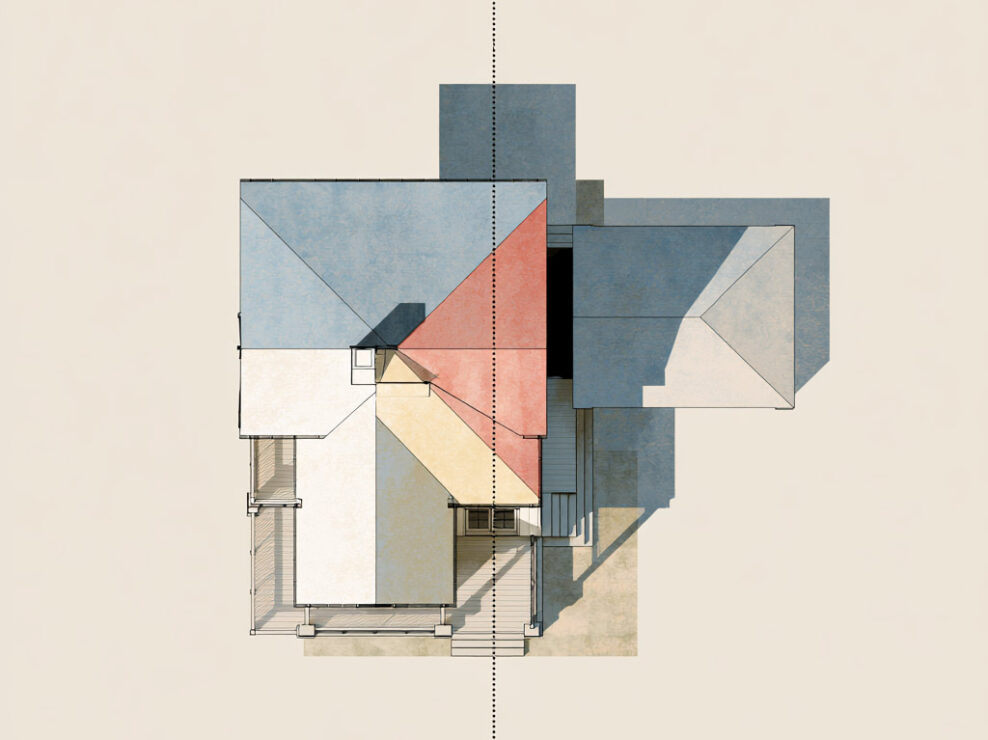
The rule applies to the applicable roofing system or roof section, not necessarily the entire house. Whether an area is considered a separate roof section depends on the building’s design and the determination of the local building official. Factors such as structural separation, changes in construction, or other physical distinctions may be considered.
Practical examples:
- A detached garage is typically its own section.
- A main house roof and a separate flat-roofed addition may be separate sections.
- Many conventional hip roofs are treated as a single roof section because the roof planes are part of one continuous roofing system. However, the final determination rests with the local building official.
This matters because 25% of a small section is a much smaller number than 25% of a large one. It’s a determination best made by your contractor in consultation with the local building department, because interpretation can vary between jurisdictions.
The 12-Month Window
The rule looks at a rolling 12-month period. Repairs are cumulative. This is worth knowing before you approve a series of small patches. It also matters in the aftermath of a storm — a tarp or temporary emergency roof repair to stop active water intrusion is a different thing from a permitted repair, but the permanent work that follows does count toward the 25% threshold.
For roofing systems or roof sections that do not qualify for the statutory exception, repairs performed within the same rolling 12-month period may be cumulative. For example, repairing 15% in March and another 15% in September could exceed the 25% threshold.
This is worth knowing before you approve a series of small patches. A contractor who understands the code will tell you when you’re approaching the threshold. One who doesn’t may quietly walk you into a full replacement you didn’t plan for.
Does the 25% rule apply to the whole house or just one roof section?
Just the roof section. A detached garage or a structurally separate addition may be evaluated independently. Confirm the boundaries with your contractor and the local building department.
Is the 25% rule repealed?
No. It still exists in the Florida Building Code. SB 4-D created an exception for roofs built under the 2007 code or later that are not leaking — it did not eliminate the rule.
Does the 25% rule mean my insurance has to buy me a new roof?
No. The rule is a building code requirement, not an insurance obligation. What your insurer pays is governed by your policy, including whether you carry ordinance or law coverage.
What if my roof is from 2005?
It predates the 2007 code, so the SB 4-D exception does not apply. The standard 25% analysis is in play.
Can I repair 24% every year to avoid the rule forever?
The window is a rolling 12 months, so in theory. In practice, a roof needing that much annual repair is telling you something, and the cost of repeated repairs typically exceeds replacement within a few cycles.
Does the rule apply to tile roofs?
Yes. The 25% threshold applies across roof covering types, though what “bringing it to code” requires differs by material.
Who decides whether the rule is triggered?
The local building department, based on the permit application and the scope of work submitted by your contractor. This is why the contractor’s scope write-up matters.
What This Means If You’re an Orlando Homeowner Right Now
Three scenarios cover most people:
Your roof is post-2007 and not leaking. You have real flexibility. A targeted repair is likely permissible even if it exceeds 25% of the section. Don’t let anyone tell you a full replacement is legally mandatory without first confirming your roof’s code year.
Your roof is pre-2007. The traditional 25% rule is more likely to apply. If storm damage exceeds a quarter of a roof section, plan for the possibility that a full replacement becomes the practical path. Our guide to deciding between repair and replacement walks through the cost and condition thresholds that usually settle the question. Also, check your ordinance or law coverage now, not after the storm.
You don’t know your roof’s age. Find out. It’s the single most consequential fact about your roof, and it takes one permit search or one inspection to establish.
Get a Straight Answer About Your Roof
DRS Roofing has been serving Central Florida homeowners since 1995, and we’ve helped thousands of homeowners navigate roofing repairs, replacements, insurance claims, and changing building codes. We can review your permit history, inspect your roofing system, and explain how Florida’s 25% roof rule may apply to your specific situation—so you can make an informed decision before committing to a costly repair or replacement.
Every roofing project is unique. A professional inspection and permit review are the best way to determine how Florida’s roofing requirements apply to your specific home.
Official Florida Roofing Code References
Florida Statute §553.844 – Windstorm loss mitigation; roofing provisions
Florida Building Code – Existing Building, Section 706 (Roof Repairs)
Florida Building Commission
Orange County Fast Track Permit Search
Seminole County Building Services
Osceola County Permit Center
Lake County Building Services
This article is provided for general informational purposes by DRS Roofing of Central Florida and reflects the website’s understanding of the Florida Building Code as of July 2026. Building codes and their interpretation change, and local jurisdictions may apply them differently. It is not legal advice and is not a substitute for consultation with your local building department, a licensed contractor, or a qualified attorney regarding your specific situation.