Your roof starts leaking after a storm. One contractor says you need a new roof. Another says a repair will do the job. A third quotes something in between. Now you’re standing in your living room with a bucket under a drip, wondering who to believe.
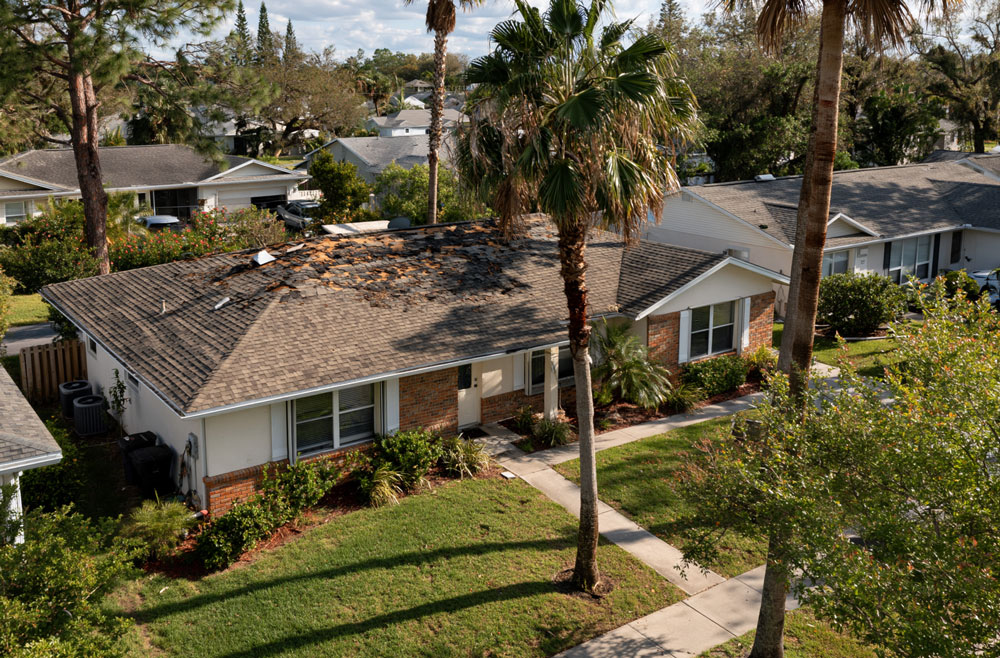
This is one of the most common — and most expensive — decisions Orlando homeowners face. A roof repair might cost a few hundred dollars. A full roof replacement in Central Florida typically runs $14,000 to $22,000. Getting this call wrong in either direction costs real money: replace too early and you’ve wasted years of remaining roof life; patch too long and you’re pouring money into a failing system while water damage spreads to your decking, insulation, and drywall.
The good news: the repair-or-replace question has a logical framework. Work through the factors below in order, and the right answer usually becomes clear — without having to take any single contractor’s word for it.
Why Orlando Roofs Wear Out Faster Than National Averages Suggest
National roofing guides will tell you an asphalt shingle roof lasts 25 to 30 years. In Central Florida, that number is optimistic — and understanding why matters for every decision that follows.
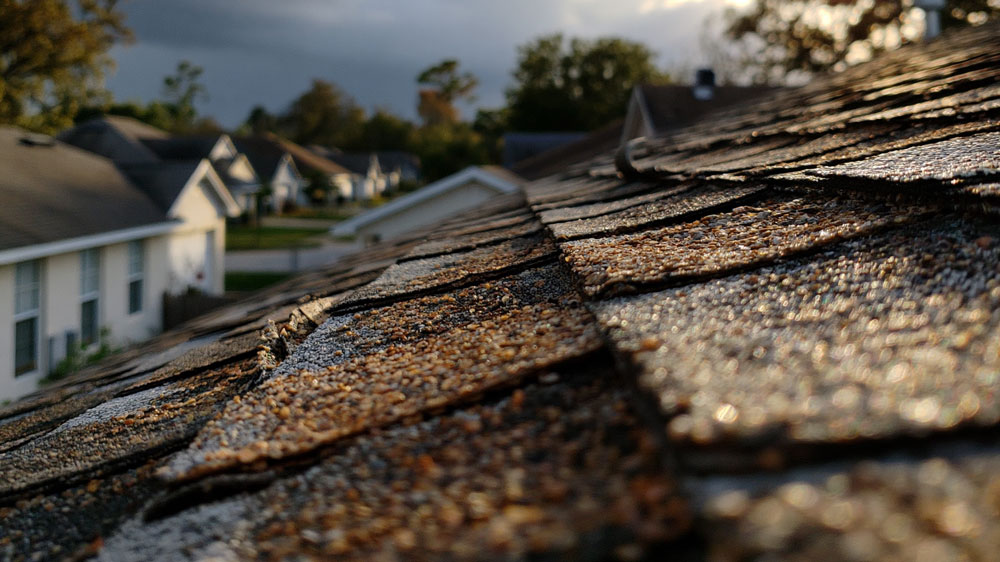
Orlando averages more than 90 thunderstorm days per year. Summer UV index readings regularly hit 10 or higher. The daily swing between morning and afternoon temperatures forces roofing materials to expand and contract in a cycle that repeats over 300 days a year. That constant movement stresses the adhesive bonds in asphalt shingles, loosens flashing seals around chimneys and vents, and accelerates granule loss — the protective mineral coating that shields shingles from UV degradation.
The practical result: a 15-year-old shingle roof in Orlando is often in the same functional condition as a 20-year-old roof in Georgia or the Carolinas. Keep that in mind as you work through everything below. Florida numbers, not national numbers, should drive your decision.
Signs You May Need a New Roof
Before crunching any numbers, walk your property and look for these warning signs. You can spot most of them from the ground with a pair of binoculars — never climb onto a damaged roof yourself.
From the outside:
- Missing shingles or shingles that have shifted out of alignment
- Curling or cracking shingles, especially at the edges
- Granule loss — bald-looking patches on shingles, or granules accumulating in your gutters and downspouts
- Sagging roof lines — any visible dip or wave in the roof deck indicates possible structural problems with the roof boards beneath
- Damaged or rusted flashing around chimneys, vents, and skylights
From inside the attic:
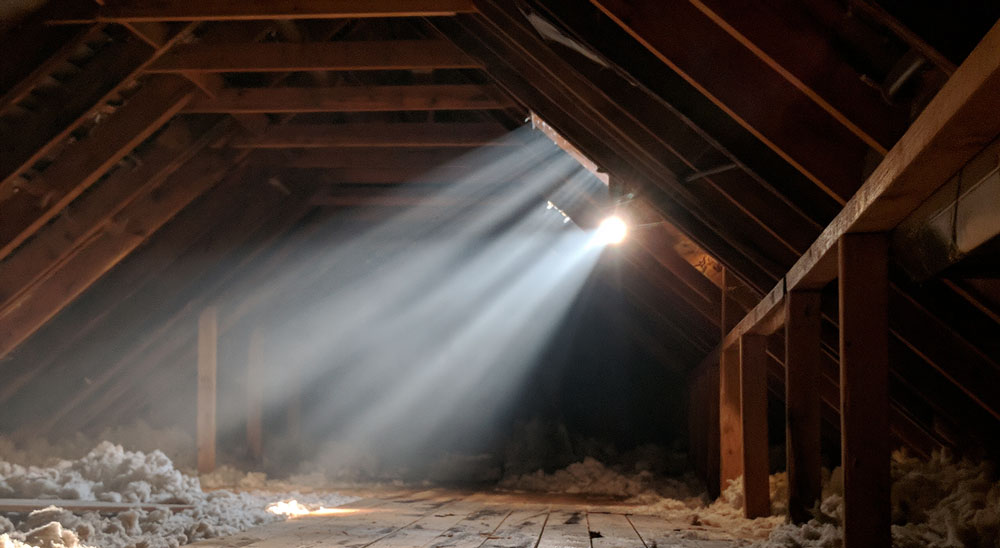
- Daylight visible through the roof boards
- Water stains or dark streaks on the underside of the decking
- Soft spots, mold, or rot when you press on the roof boards
- Damp or compressed insulation
One or two of these signs on a newer roof usually points to a repairable problem. Several of them together — especially on a roof past the 15-year mark — is the roof telling you it’s approaching the end of its life span.
The 5 Factors That Decide Repair vs. Replacement
1. Roof Age and Material Life Span
Age is the single most useful starting point because it puts every other factor in context.
| Roofing Material | Typical Florida Life Span |
|---|---|
| 3-tab asphalt shingles | 10–15 years |
| Architectural shingles | 15–20 years |
| Concrete or clay tile | 30–50 years (underlayment: 20–25 years) |
| Metal roofing | 40–70 years |
| Flat / modified bitumen | 10–20 years |
Note the tile caveat: the tile itself may look fine from the street for decades, but the underlayment beneath it — the actual waterproofing layer — typically needs replacement around year 20 to 25 regardless.
If your roof is well within its expected life span and the damage is isolated, repair is a reasonable conversation. If it’s at or past these thresholds, every repair dollar buys a diminishing return on a system that’s already aging out.
2. Extent and Severity of the Damage
Age tells you about the system. Damage extent tells you whether the problem is isolated or widespread.
Repair makes sense when: damage is contained to one slope or section, a single identifiable event caused it (a fallen branch, wind-lifted shingles along one edge, a cracked pipe boot), and the surrounding material is in solid condition. Replacing a handful of missing shingles promptly — with color-matched replacements — is one of the most cost-effective things a homeowner can do.
Replacement becomes the smarter path when: damage appears in three or more separate locations, deterioration is widespread rather than event-driven, or the decking shows soft spots, rot, or water intrusion in multiple areas. When an inspection finds problems on several slopes at once, the cost of fixing each individually often approaches the cost of a full replacement — without the warranty.
3. Florida’s 25% Rule (and Why It Changed in 2022)
This is the factor most national guides miss entirely, and it can take the decision out of your hands.
Florida Building Code historically required that if more than 25% of a roof section is repaired or replaced within any 12-month period, the entire roof section must be replaced to meet current code. The threshold is cumulative — a 15% repair in June and another 15% in December puts you over the line.
But in May 2022, Senate Bill 4-D changed the rule significantly: if your roof was built or last replaced in compliance with the 2007 Florida Building Code or later (generally, permitted after March 1, 2009), the full-replacement mandate no longer applies. You can repair any percentage of a code-compliant roof, and only the repaired portion needs to meet current code.
What this means practically:
Roof permitted after March 2009: the 25% rule likely doesn’t force replacement, no matter how much storm damage you have
Roof permitted before March 2009: the old rule still applies — extensive damage can legally require a full roof replacement
Be aware that this rule gets misused in both directions. Some storm-chasing contractors overestimate damage to trigger the rule and sell a replacement you don’t legally need. Verify your roof’s permit date with your county building department, and get a second opinion from a licensed local contractor before agreeing to a “code-required” replacement.

4. The Repair-to-Replacement Cost Ratio
A full architectural shingle roof replacement in Orlando typically costs $14,000 to $22,000 for an average home, depending on roof size, pitch, complexity, and material choices. Hidden costs can add to that figure — tear-off and disposal of the old roof, and decking repairs if the inspection reveals rotted roof boards once the shingles come off.
A typical roof repair runs $400 to $2,500 depending on the damage type — a few missing shingles on the low end, flashing replacement or a valley rebuild on the high end.
The benchmark most roofing professionals use: if repair costs exceed 30 to 40% of full replacement cost, replacement deserves serious consideration — especially on an aging roof. There’s a second version of this test that matters just as much: add up everything you’ve spent on repairs over the past five years. If multiple repairs are stacking up — three patches in four years, say — you’re paying replacement-level money in installments while still owning an old roof. That’s the least cost-effective position to be in.
5. Your Homeowners Insurance Situation
This factor is uniquely important in Florida and catches many homeowners off guard.
Florida’s homeowners insurance market has tightened dramatically, and roof age is one of the primary pressure points. Many carriers decline renewals, exclude roof coverage, or sharply raise premiums on homes with roofs older than 15 years. Some require replacement as a condition of continued coverage — regardless of the roof’s actual condition. If your insurer is already flagging your roof’s age, a repair won’t resolve the coverage problem. In that scenario, replacement is an insurance decision as much as a roofing one.
On the other hand, if your damage came from a covered event — a named storm, high winds, hail, a falling tree — your policy may cover repair or replacement minus your deductible. To protect your claim:
- Document everything immediately. Date-stamped photos and video of all visible damage, inside and out, before any work begins
- Notify your insurer before authorizing major work (emergency tarping to prevent further damage is generally fine and expected)
- Get a professional inspection report with photos and moisture readings to submit with your claim
- Stick to facts with the adjuster. Describe what happened and when. Don’t speculate about pre-existing wear, don’t guess at causes, and don’t minimize the damage — let the documentation speak
A professional roof inspection with proper documentation is often the difference between a smooth claim and a denied one.
| Situation | Likely Answer |
|---|---|
| Roof under 15 years, isolated damage, first repair | Repair |
| Roof 15–20 years, single problem area, no prior repairs | Repair — but get a full inspection |
| Roof over 20 years, damage in multiple areas | Replacement |
| Pre-2009 roof with damage exceeding 25% of a section | Replacement (likely code-required) |
| Insurance carrier flagging roof age | Replacement |
| Repair cost exceeds 30–40% of replacement cost | Replacement |
| Three or more repairs in the past five years | Replacement |
| Storm damage on a newer, code-compliant roof | Likely covered repair |
If You Replace: Get the Florida-Specific Upgrades
A replacement isn’t just a like-for-like swap — it’s your one chance every two decades to upgrade the whole system. For Central Florida specifically:
Impact-resistant shingles. Class 4 impact-rated shingles hold up better in hail and wind events and may qualify you for insurance premium discounts through Florida’s wind mitigation credits.
Energy efficiency. Cool-roof rated shingles and metal roofing reflect more solar heat, which directly reduces cooling costs in a climate where air conditioning runs most of the year. Replacement is also the right time to address attic ventilation and insulation — poor ventilation bakes shingles from below and shortens the new roof’s life.
Wind mitigation features. Upgraded underlayment, improved roof-to-wall connections, and sealed roof decks can earn meaningful insurance discounts. Ask your contractor for a wind mitigation inspection report after the work is done — it’s a one-page document that can save hundreds per year on premiums.
Solar readiness. If solar is anywhere in your future plans, coordinate it with the replacement. Installing solar with a new roof avoids paying twice for labor and ensures the panels and warranty are properly integrated.